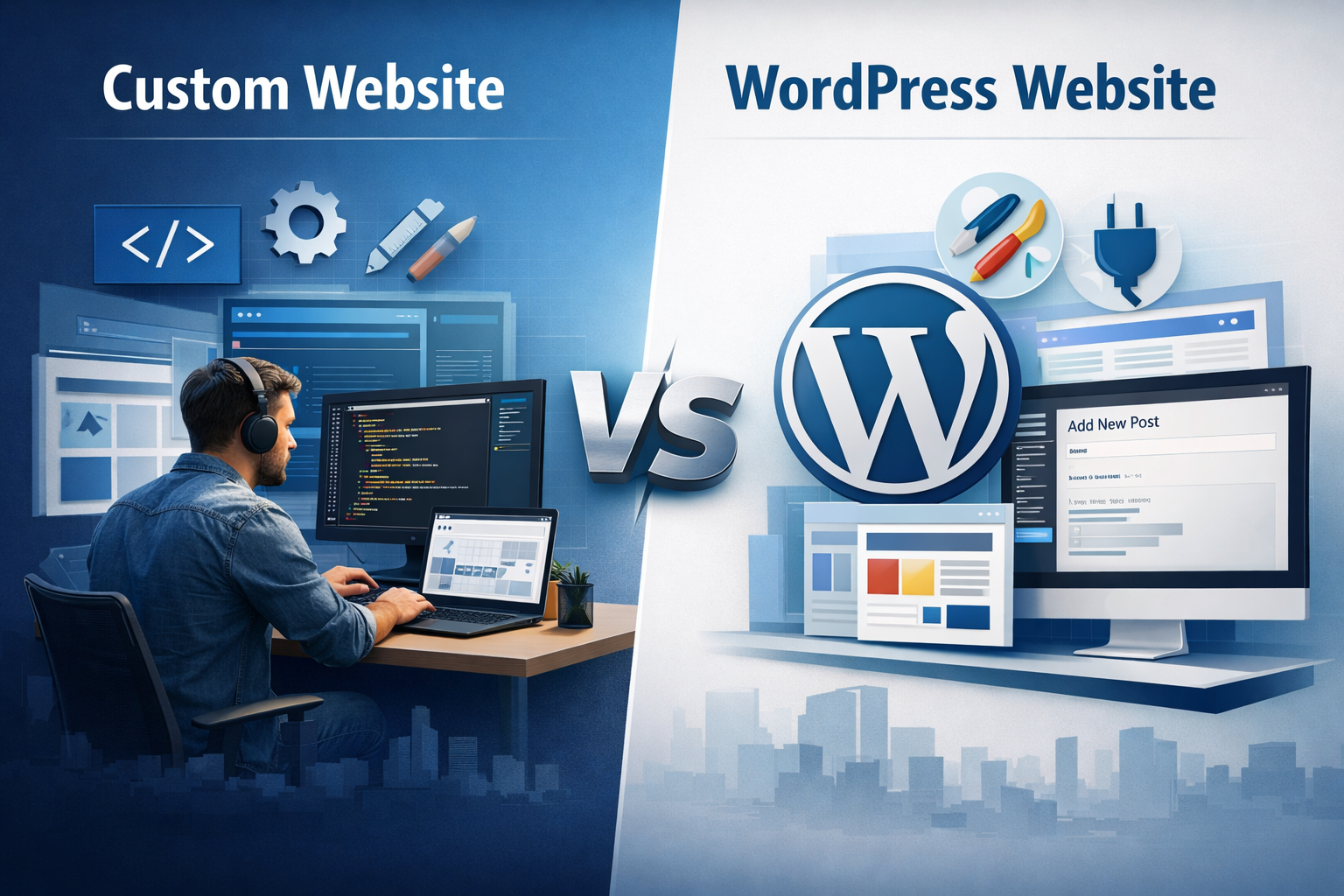
If you’re planning to build a website, one of the first decisions you’ll face is whether to go with a custom-built website or a WordPress website. Both options are popular, powerful, and widely used—but they serve different needs. Understanding the differences can help you choose the right approach for your goals, budget, and long‑term plans.
In this blog, we’ll break down what each option means and compare them across key factors like cost, flexibility, performance, and maintenance.
What Is a Custom Website?
A custom website is built from the ground up by developers using programming languages such as HTML, CSS, JavaScript, and backend technologies like PHP, Python, or Node.js. Everything—from the layout and features to the database structure—is tailored specifically to your requirements.
Custom websites are often used by businesses or organizations that need unique functionality, high performance, or complete control over how their site works and looks.
Key Characteristics of Custom Websites
- Built specifically for one purpose or brand
- Fully customizable design and functionality
- No reliance on pre-made themes or plugins
- Requires professional development skills
What Is a WordPress Website?
A WordPress website is built using WordPress, a popular content management system (CMS) that powers over 40% of websites worldwide. WordPress allows users to create websites using ready-made themes and plugins, often without needing to write code.
It’s a go-to choice for blogs, small business websites, portfolios, and even e‑commerce stores.
Key Characteristics of WordPress Websites
- Uses pre-built themes and plugins
- Easy to manage content
- Beginner-friendly
- Large community and ecosystem
Key Differences Between Custom and WordPress Websites
1. Customization and Flexibility
Custom Website:
A custom website offers unlimited flexibility. Developers can build exactly what you need, without being restricted by templates or plugin limitations.
WordPress Website:
WordPress is flexible, but within limits. You’re often dependent on themes and plugins, which may not support very specific or complex features.
Winner: Custom Website
2. Cost
Custom Website:
Custom development is usually more expensive. Costs include design, development, testing, and ongoing maintenance.
WordPress Website:
WordPress itself is free, and many themes and plugins are low-cost or free. This makes it more budget-friendly, especially for small projects.
Winner: WordPress Website
3. Development Time
Custom Website:
Because everything is built from scratch, custom websites take more time to develop.
WordPress Website:
WordPress websites can be launched quickly using ready-made themes and plugins.
Winner: WordPress Website
4. Ease of Use
Custom Website:
Managing content on a custom site may require technical knowledge unless a custom admin panel is built.
WordPress Website:
WordPress is known for its user-friendly dashboard, making it easy for non-technical users to update content.
Winner: WordPress Website
5. Performance and Speed
Custom Website:
Custom websites are often faster because they only include necessary code and features.
WordPress Website:
Performance can be affected by heavy themes and too many plugins, though optimization can help.
Winner: Custom Website
6. Security
Custom Website:
Custom sites are generally more secure because they are less predictable and not common attack targets.
WordPress Website:
WordPress is secure, but its popularity makes it a common target for hackers, especially if plugins and themes are outdated.
Winner: Custom Website
7. Maintenance and Updates
Custom Website:
Maintenance often requires a developer to fix bugs, update features, or improve security.
WordPress Website:
WordPress makes updates easy, but frequent updates to themes and plugins are necessary.
Winner: WordPress Website (for non-technical users)
Which One Should You Choose?
Choose a custom website if:
- You need unique or complex functionality
- Performance and scalability are critical
- You want complete control over your site
- You have a higher budget
Choose a WordPress website if:
- You want to launch quickly
- You’re on a limited budget
- You want to manage content easily
- Your site needs are relatively standard
Conclusion
Both custom websites and WordPress websites have their strengths and weaknesses. There’s no one-size-fits-all answer—the best choice depends on your specific needs, goals, and resources.
If you’re building a simple blog or business site, WordPress is often the smartest choice. But if you’re aiming for a highly customized, high-performance solution, a custom website may be worth the investment.
Understanding these differences will help you make a confident, informed decision for your next web project.
Most Popular
-
Custom Website vs WordPress Website: What’s the Difference?
If you’re planning to build a website, one of the first decisions you’ll face is whether to go with a custom-built website or a WordPress website. Both options are popular, powerful, and widely used—but they serve different needs. Understanding the differences can help you choose the right approach for your goals, budget, and long‑term plans.…