
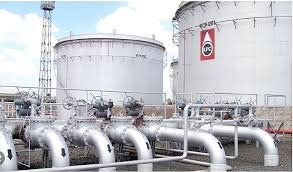
Questions have emerged over the government’s plan to privatise the Kenya Pipeline Company (KPC), with Members of Parliament raising concerns over transparency and the valuation process of the state-owned firm.
The Joint Committee on Energy and the Committee on Public Debt and Privatisation expressed concern that public participation on the plan has not been adequately conducted, leaving many Kenyans unaware of the potential implications of selling the key national asset.
According to the committees, the process has lacked openness, with critical information such as the company’s valuation yet to be shared publicly.
The Committee, co-chaired by Nakuru Town East MP David Gikaria and Balambala MP Abdi Shurie, are at the forefront of examining the privatisation proposal.
Under the plan, the National Treasury intends to retain a 35 per cent stake in KPC while offering 65 per cent of the shares to the public through the Nairobi Securities Exchange.
Members of the National Assembly’s Energy Committee voiced doubts over the decision to sell a majority stake in the strategic company, describing KPC as a critical national asset.
The MPs accused the Treasury of running an opaque process, highlighting that the committee has yet to receive the company’s valuation report.
“You cannot sell something that you do not even know its value,” Wajir East MP Aden Daudi said, emphasising the need for a thorough valuation of KPC and its assets to be made public to establish the true worth of the company.
The MPs also raised concerns over the future of KPC employees, fearing that privatisation might lead to restructuring and job losses.
In response, Energy Cabinet Secretary Opiyo Wandayi assured legislators that employee welfare is protected under existing legal frameworks.
“We do not foresee any job losses or any restructuring to the current job structures at KPC,” Wandayi said.
However, Gem MP Elisha Odhiambo challenged the assurance, stating that many KPC staff are anxious about the proposed changes but reluctant to speak out due to fear of victimisation.
“Most KPC employees are afraid to speak openly, but the true position is that they are distressed by the proposal,” he said.
The committee is expected to meet again with the Treasury and the Office of the Attorney General on Wednesday, August 13, before making final recommendations on the privatisation plan.
Treasury Cabinet Secretary John Mbadi has defended the government’s intention to sell a portion of the Company, arguing that it offers a way to generate funds without increasing taxes on Kenyans.
TORORO, UGANDA – In a landmark move set to reshape the region’s energy landscape, Kenya has formally invited Uganda to acquire a significant stake in the Kenya Pipeline Company (KPC). President William Ruto announced on Sunday, November 23, 2025, that Kenya plans to divest up to 65% of its ownership in the strategic state corporation, opening the door for Ugandan and other East African investors.
The announcement was made during the groundbreaking ceremony for the Devki Steel factory in Tororo, Uganda, an event attended by both President Ruto and his Ugandan counterpart, Yoweri Museveni. President Ruto framed the decision as a pivotal step towards shared ownership of critical regional infrastructure. “I have given appropriate guidance on the need for Uganda and Kenya, public and private, to jointly own the Kenya Pipeline Company. That facility is not just a Kenyan facility; it is a regional facility,” President Ruto stated.
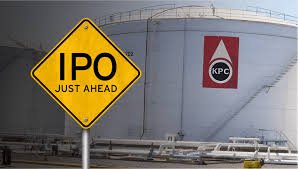
Under the proposed plan, the Kenyan government will retain a 35% strategic shareholding in KPC. The remaining shares will be listed on the Nairobi Securities Exchange (NSE), with President Ruto explicitly encouraging the Ugandan government, private entities, and citizens across the East African Community (EAC) to invest. According to officials, the Initial Public Offering (IPO) is expected to be completed by March 31, 2026, a process that received parliamentary approval in October 2025.
Deepening Regional Integration
This initiative is part of a broader strategy to enhance economic and infrastructural ties within the EAC. For years, Uganda has relied almost exclusively on KPC’s network to import petroleum products from the port of Mombasa. Acquiring a stake would grant Kampala influence over tariffs, operations, and future expansion of the pipeline, potentially easing historical tensions over fuel import logistics. The move follows high-level negotiations, including a joint ministerial meeting in Nairobi last week that finalized the cooperation framework.
The partial privatization and regional co-ownership are expected to unlock new capital for significant expansion projects. President Ruto confirmed that both governments have agreed to co-invest in extending the petroleum pipeline from Eldoret, through Kampala, and onward to Rwanda and the Democratic Republic of Congo (DRC). This extension aims to solidify the Northern Corridor as the dominant fuel artery for the region, especially as Tanzania promotes its Central Corridor as a competitive alternative.
Synergy with SGR Expansion
The pipeline strategy is closely linked with ambitious plans for the Standard Gauge Railway (SGR). President Ruto announced that Kenya and Uganda will jointly launch the extension of the SGR from Naivasha to Kampala in January 2026. This long-awaited project is designed to create a seamless transport corridor from Mombasa deep into the East and Central African hinterland, connecting with the pipeline route and significantly lowering logistics costs. “We will coordinate the two governments to improve transport and logistics in our region and be more competitive and enhance collaboration,” Ruto remarked.
Financial and Economic Implications
The Kenya Pipeline Company is one of the nation’s most valuable state-owned enterprises. A valuation by Standard Investment Bank (SIB) in October 2025 placed the company’s worth at approximately KSh 102 billion. Government estimates from August 2025 suggested a value of around KSh 120 billion, with the Treasury hoping to raise about KSh 100 billion from the sale. For the financial year 2023/24, KPC reported a net profit of KSh 6.9 billion on total equity of KSh 89 billion.
The proceeds from the privatization are intended for budgetary support and to reduce government borrowing, creating more fiscal space. Energy and Petroleum Cabinet Secretary Opiyo Wandayi has previously assured the public that the sale will not lead to fuel price instability, as the Energy and Petroleum Regulatory Authority (EPRA) will continue to regulate tariffs through its established models.
By inviting regional participation, Kenya aims to transform a national asset into a shared regional resource, strengthening economic interdependence and cementing its role as the primary logistics hub for East Africa. The joint ownership is poised to be the most significant restructuring of Kenya’s energy infrastructure in decades, marking a new chapter of cooperation between Nairobi and Kampala.