As the first cohort of learners under the Competency-Based Education (CBE) system prepares to transition to Grade 10, many parents across the country remain uncertain about placement procedures, transfer options, and key deadlines.
The Ministry of Education has acknowledged the concerns and outlined clear guidelines on how placement reviews and transfers are handled for senior secondary schools.
Placement review and transfer process
Following the release of Grade 10 placements based on the 2025 Kenya Junior Secondary Education Assessment (KJSEA), the Ministry opened official placement review windows to allow parents and learners to seek changes where necessary.
The initial revision window opened on December 23, 2025, with a subsequent extension running in early January 2026. These windows were intended to address cases involving pathway mismatches, school capacity issues, or other genuine placement concerns.
Parents seeking a transfer or a change of pathway are required to visit the head of the junior school where the learner sat the Grade 9 assessment. The request is not made directly by the parent but is instead submitted by the school head through the Kenya Education Management Information System (KEMIS).
It is important to note that a transfer can only be approved if the target senior school has officially declared a vacancy through the County or Sub-County Director of Education.

Key rules parents should understand
The Ministry has set strict rules governing placement changes:
- A learner is allowed only one placement change.
- Once a revised placement is approved and new joining instructions are generated, the decision becomes final and irreversible.
- All approved transfers must be captured in the KEMIS system, and admission letters must be printed from the official portal. Manually issued or unofficial letters are not recognised.
Reporting date for Grade 10
The official reporting date for all Grade 10 learners is January 12, 2026. Parents are advised to ensure that any placement review or transfer request is completed within the stipulated timelines to avoid last-minute complications.
Learners who do not report on time risk forfeiting their placement, unless valid reasons are communicated through the appropriate education offices.
The importance of pathway selection
Under the CBE structure, senior secondary education is organised into pathways, including STEM, Social Sciences, and Arts and Sports. Placement is therefore not only about the school but also about the pathway a learner has been assigned.
Education officials have advised parents to carefully consider whether the assigned pathway aligns with the learner’s strengths, interests, and long-term goals before requesting a revision.
What parents are advised to do
The Ministry of Education continues to urge parents to:
- Seek clarification early through their child’s junior school
- Rely only on information from official Ministry channels
- Avoid brokers or unofficial intermediaries promising placement changes
As schools reopen, education stakeholders say continued communication between parents, schools, and education offices will be key to ensuring a smooth transition into Grade 10 for learners across the country.
The Ministry of Education’s senior school placements have stirred confusion and frustration, with thousands of high-performing students finding themselves in unexpected pathways or schools, even as nearly 50 per cent were placed in Science, Technology, Engineering and Mathematics (STEM) courses.
While education officials insist the process followed a merit-based and equitable framework, parents and learners say the outcomes failed to reflect performance, choice or proximity to home.
At least 49 per cent of candidates secured STEM placements, 40 per cent joined the Social Sciences pathway, while the remaining 11 per cent were admitted into Arts and Sports pathways.
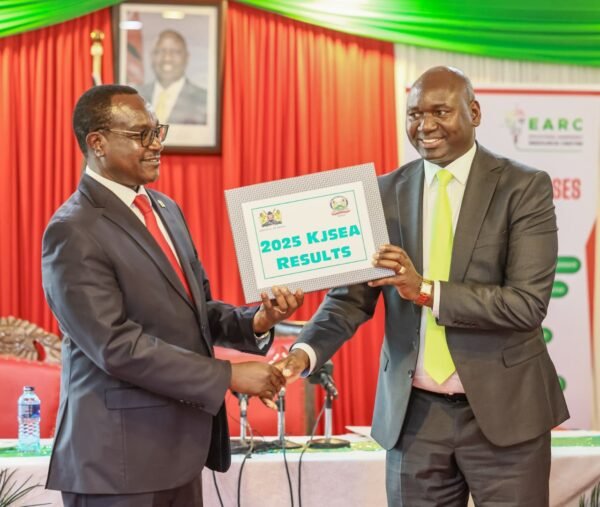
Basic Education Principal Secretary Julius Bitok said 512,000 learners were placed in STEM schools, 420,000 in Social Sciences institutions and 115,000 in Arts and Sports pathways. A further 83,000 learners with special needs were also placed in various institutions.
Placement figures also varied across the four senior school clusters. Cluster One schools, formerly national schools with the highest infrastructure and specialisation capacity, admitted 105,000 learners. Cluster Two schools, previously extra-county institutions, absorbed 254,000 learners. Cluster Three, made up of former sub-county schools, enrolled 288,000 learners, while Cluster Four schools, the largest group and largely day institutions, received 399,000 learners, accounting for the highest number of placements.
The ministry directed that learners report to their respective senior schools by Monday, January 12, 2026.
Bitok said placement into senior secondary schools followed a structured and merit-based framework under the Competency-Based Education (CBE) system.
“The selection of learners is guided by a clear framework that considers their choices, performance in the Kenya Junior School Education Assessment, and the availability of spaces in their preferred schools and subject combinations,” he said.
He explained that placement decisions were guided by three core factors, including a learner’s preference, their KJSEA performance and available vacancies in selected schools.
“Each pathway has specific subject tracks, and learners are placed according to their academic performance in relevant learning areas and the school’s specialisation and capacity. The final allocation also considers approved school capacity and sub-county quotas, computed using a modified County Revenue Allocation formula to ensure fairness across regions,” he said.