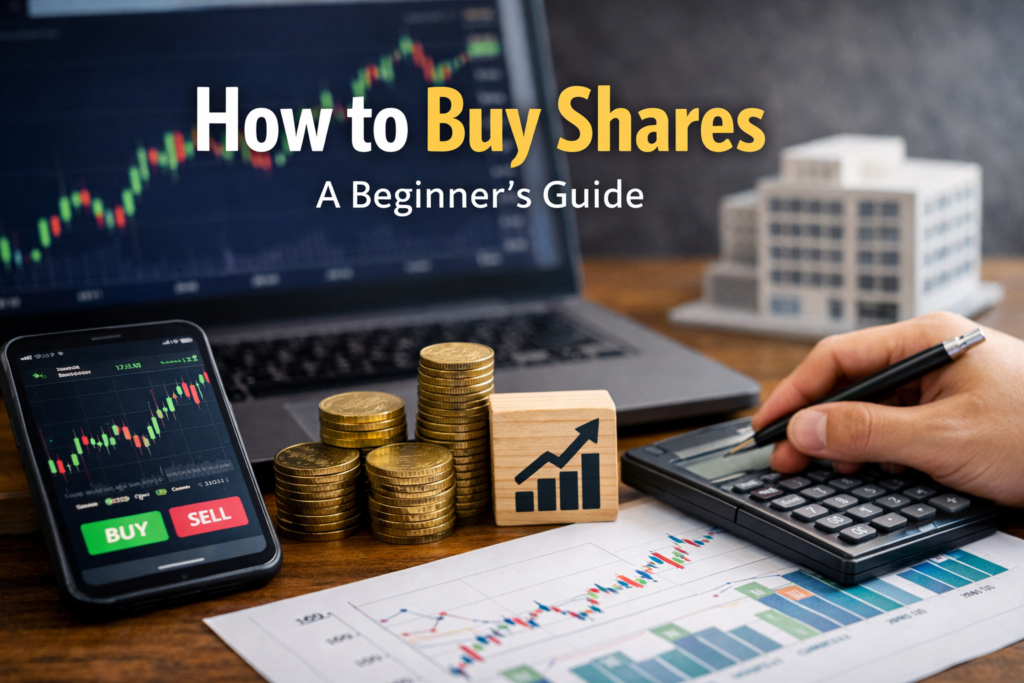
Buying shares (also called stocks) means purchasing a small ownership stake in a company. When the company does well, the value of your shares may increase, and you may also receive dividends. This guide explains, step by step, how beginners can buy shares safely and confidently.How to Buy Shares: A Beginner’s Guide.
What Are Shares?
A share represents a unit of ownership in a company. Companies sell shares to raise money for growth, and investors buy them hoping to benefit from the company’s success.
How to Buy Shares: A Beginner’s Guide
When you own shares, you may:
- Gain value if the share price rises
- Receive dividends (a portion of company profits)
- Have voting rights in some company decisions (depending on the share type)
Step 1: Learn the Basics of the Stock Market
Before buying shares, it’s important to understand a few key terms:
- Stock Market: A place where shares are bought and sold (such as stock exchanges)
- Broker: A platform or service that lets you buy and sell shares
- Share Price: The current cost of one share
- Risk: Share prices can go up or down, and losses are possible
Learning these basics helps you make informed decisions rather than emotional ones.
Step 2: Decide How Much You Want to Invest
Only invest money you don’t need for daily expenses or emergencies. Many beginners start small and increase their investment as they gain experience.
A good habit is to:
- Set a clear budget
- Avoid borrowing money to invest
- Think long-term rather than trying to make quick profits
Step 3: Choose a Brokerage Account
To buy shares, you need a brokerage account. Brokers act as intermediaries between you and the stock market.
When choosing a broker, consider:
- Ease of use (especially for beginners)
- Fees and commissions
- Educational tools and resources
- Customer support
Some brokers offer mobile apps, making investing more accessible.
Step 4: Research Companies
Research is one of the most important steps. Don’t buy shares just because others are doing so.
Look into:
- What the company does
- Its financial performance
- Long-term growth potential
- Industry and competition
Understanding the company helps you feel more confident about your investment.
Step 5: Place Your First Order
Once you’ve chosen a company, you can place an order through your broker.
Common order types include:
- Market Order: Buys shares at the current price
- Limit Order: Buys shares only at a price you choose
After placing the order, the shares will appear in your account if the purchase is successful.

Step 6: Monitor and Learn
Buying shares is not a one-time activity. Track your investments regularly and stay informed about market news.
However, avoid checking prices too often. Long-term investors focus more on company performance than daily price changes.
Common Mistakes to Avoid
- Investing without research
- Panicking when prices fall
- Putting all your money into one company
- Expecting guaranteed profits
Patience and discipline are key to successful investing.
Final Thoughts
Buying shares is a powerful way to participate in the growth of companies and build financial knowledge. Start small, keep learning, and focus on long-term goals. With time and experience, investing can become a valuable skill for your future.
Disclaimer: This article is for educational purposes only and does not provide financial advice.
-
How to Buy Shares: A Beginner’s Guide
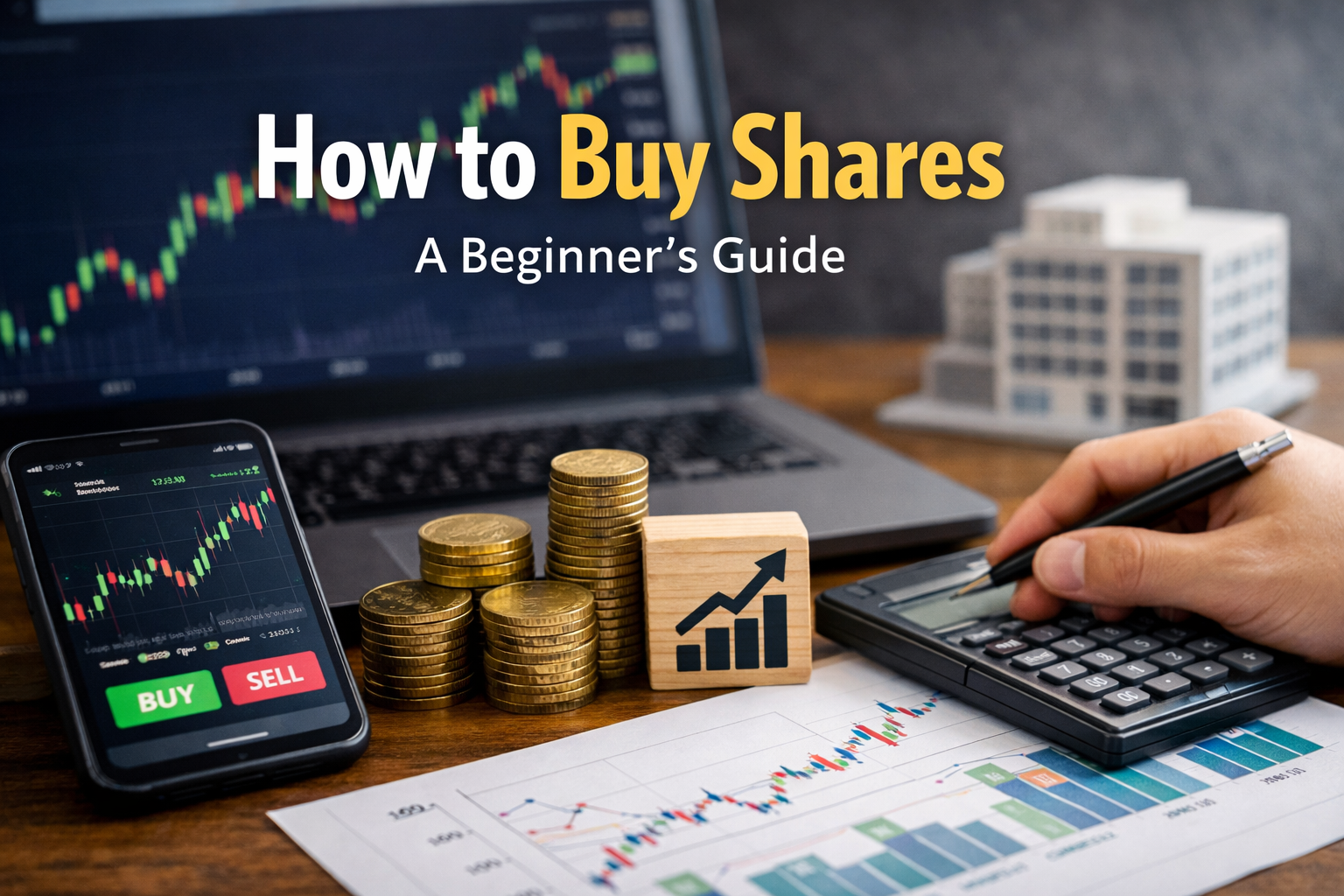
Buying shares (also called stocks) means purchasing a small ownership stake in a company. When the company does well, the value of your shares may increase, and you may also receive dividends. This guide explains, step by step, how beginners can buy shares safely and confidently.How to Buy Shares: A Beginner’s Guide. What Are Shares?…