The Post-Election Violence (PEV) in Kenya, which took place after the December 2007 general elections, remains one of the most painful and defining moments in the country’s modern history. The conflict shocked the nation, disrupted lives, and exposed deep social, political, and economic issues that had been building up for years.
This article breaks down the causes, events, impact, and long-term consequences of the violence.
What Triggered the 2007–2008 Post-Election Violence?
The violence was triggered by a disputed presidential election between:
- Mwai Kibaki (PNU)
- Raila Odinga (ODM)
Early results suggested an ODM lead, but later tallying changed dramatically. Observers and opposition leaders raised concerns about inconsistencies, tallying irregularities, and possible manipulation.
When the Electoral Commission of Kenya (ECK) announced Kibaki as the winner and swore him in quickly and privately, tension exploded across the country.
How the Violence Unfolded
The violence started almost immediately in several regions. It took different forms depending on the area and local dynamics:
Ethnic Violence
Communities that had lived side-by-side for decades suddenly turned against each other.
Longstanding issues over land, resources, and political representation resurfaced violently.
Protests and Police Clashes
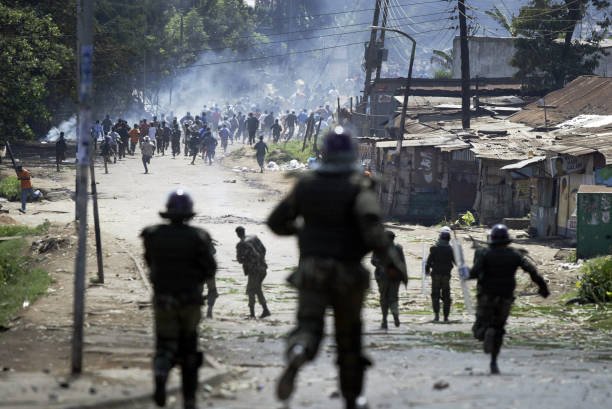
Supporters of ODM took to the streets.
Police responded with force, resulting in deaths, injuries, and mass arrests.
Revenge Attacks
What began as political protests quickly turned into ethnic retaliation in towns like:
- Eldoret
- Nakuru
- Naivasha
- Kericho
Destruction of Homes and Property
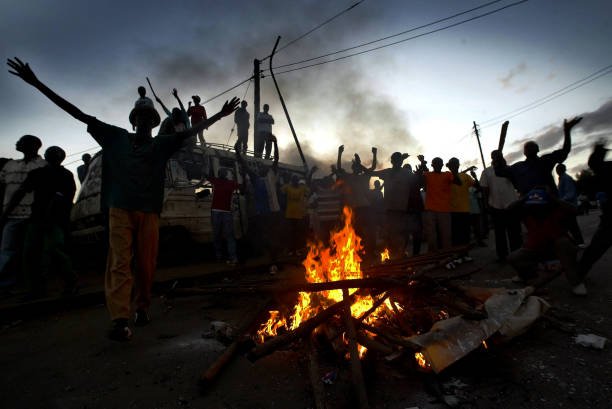
Thousands of houses were burned. Businesses were looted and destroyed. Entire neighborhoods were emptied as people fled for safety.
The Eldoret Church Tragedy
In Kiambaa, Eldoret, families seeking shelter inside a church were attacked, and the building was burned down—a moment that deeply hurt the entire nation.
The Human Cost of the Violence
The consequences were devastating:
- Over 1,100 people killed
- More than 600,000 displaced (IDPs)
- Families permanently uprooted
- Homes, farms, and businesses destroyed
- Children traumatized
- The economy severely disrupted
Many people still live with emotional scars and memories of fear, loss, and destruction.
How the Violence Ended: Mediation and Peace Talks
To stop the country from sliding deeper into chaos, international mediators stepped in.
Former UN Secretary-General Kofi Annan led the African Union mediation team.
These talks resulted in the:
National Accord and Reconciliation Act (NARA)
Key outcomes were:
- Power-sharing Government
- Mwai Kibaki remained President
- Raila Odinga became Prime Minister
- Ministries were shared between PNU and ODM
This historic compromise brought relative peace and allowed Kenya to begin healing.
Long-Term Impact and Reforms
The PEV had far-reaching consequences that changed Kenya:
The 2010 Constitution
Introduced major reforms including:
- Devolution to counties
- Independent commissions
- Reduced presidential powers
- Better checks and balances
Truth, Justice, and Reconciliation Efforts
The Waki Commission (investigated the violence)
The Kriegler Commission (investigated the election)
Their findings guided reforms in the justice system and electoral processes.
ICC Cases
A number of Kenyan leaders were later charged at the International Criminal Court (ICC). Though the cases collapsed, the process brought global attention to justice and accountability.
Peace Campaigns
Civic groups, churches, youth organizations, and political leaders became more active in promoting peace during elections.
Lessons Kenya Learned
The 2007–2008 violence taught Kenya several important lessons:
- Elections must be transparent.
- Ethnic politics is dangerous.
- Land issues must be addressed fairly.
- Security forces must protect—not harm—citizens.
- Justice is essential for peace.
- Unity is stronger than tribal divisions.
Conclusion: A Painful Past, A Stronger Future
The Post-Election Violence in Kenya was one of the darkest moments in the nation’s history, but it also marked the beginning of major reforms. Kenya learned, healed, and rebuilt.
Today, Kenyans are more politically aware, more determined to protect peace, and more united in preventing such a tragedy from ever happening again.
Remembering this story is not about reopening old wounds—
It is about ensuring history never repeats itself.
TRENDING NOW