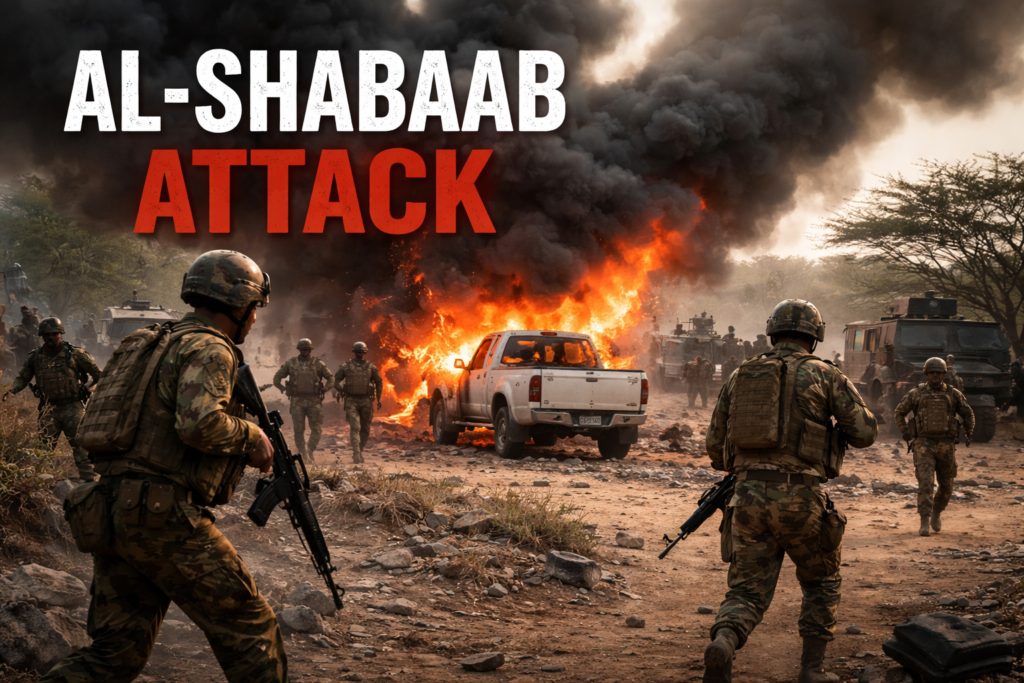
The killing of an Assyrian American civilian interpreter alongside U.S. soldiers in Syria has sparked widespread attention and grief, particularly across Assyrian and Middle Eastern communities. The incident, which involved an attack on U.S. forces during counter-ISIS operations, has also trended widely on X (formerly Twitter), where users are highlighting the often-overlooked sacrifices of interpreters who serve alongside American troops.
What Happened: Timeline of the Attack
December 13, 2025 — Central Syria (near Palmyra)
- U.S. and partner forces were conducting a routine mission and engagement in central Syria, an area where ISIS remnants remain active.
- During the operation, a lone attacker, later identified as ISIS-linked, opened fire on the patrol.
- Two U.S. Army soldiers were killed in the attack.
- A U.S. civilian interpreter, an Assyrian man originally from Iraq and later a U.S. resident, was also killed.
- Coalition and partner forces returned fire, killing the attacker.
- U.S. Central Command later confirmed the attack and classified it as an ISIS-related incident.
The attack underscores the continued volatility of the region despite years of counter-terrorism operations.
Who the Interpreter Was
The civilian interpreter killed in the attack was an Assyrian Christian of Iraqi origin who had worked for years supporting U.S. military operations in the Middle East. He later immigrated to the United States and lived in Michigan, where he raised a family.
Like many interpreters, he served as:
- A linguistic bridge between U.S. forces and local partners
- A cultural advisor in complex environments
- A key enabler of mission safety and coordination
His role placed him directly alongside U.S. troops in high-risk situations.
Why This Story Is Trending on X (Twitter)
Following news of the attack, the interpreter’s death began trending on X, particularly within:
- Assyrian and Iraqi diaspora communities
- Veteran and military advocacy circles
- Human rights and religious minority accounts
Common themes in X posts include:
- Recognition of interpreters as “forgotten heroes”
- Criticism that civilian interpreters receive less public recognition than soldiers
- Calls for greater protection and long-term support for local and civilian partners
- Expressions of grief from Assyrian Christians, who have faced decades of violence in Iraq and Syria
Many users emphasized that interpreters often face double risk: danger during service and threats to themselves or their families even after missions end.
Why Interpreters Are Vital in Military Operations
Interpreters are not passive observers—they are essential mission partners.
Key Responsibilities Include:
- Translating real-time communications during patrols and negotiations
- Advising on cultural norms to avoid misunderstandings
- Helping identify threats or suspicious behavior
- Building trust with local communities
In combat zones, interpreters frequently:
- Move with armed patrols
- Participate in meetings with local leaders
- Operate in unsecured or hostile environments
Despite this, they often:
- Do not receive the same recognition as uniformed personnel
- Face unclear long-term protections
- Are targeted by extremist groups specifically because of their role
Broader Context: U.S. Forces in Syria
The United States continues to maintain a limited military presence in Syria focused on:
- Preventing the resurgence of ISIS
- Supporting local partner forces
- Maintaining regional stability
Although ISIS no longer controls large territory, its fighters remain capable of deadly, targeted attacks, especially in desert and remote areas like central Syria.
Legacy and Impact
The death of the Assyrian interpreter has become a symbol of:
- The hidden human cost of modern warfare
- The sacrifices made by civilians supporting military missions
- The vulnerability of religious and ethnic minorities in conflict zones
For many, his story represents thousands of interpreters whose service enabled U.S. operations but whose names rarely enter public memory.
Final Thoughts
The attack that killed U.S. soldiers and an Assyrian interpreter is a reminder that war’s consequences extend far beyond uniforms. Interpreters stand at the intersection of language, culture, and conflict—often bearing immense risk with little visibility.
As the story continues to circulate on X and in global media, it raises an important question:
How do we honor and protect those who stand with soldiers but are not soldiers themselves?
Trending Now
-

The Rise, Challenges & Future of Spirit Airlines in the U.S. Travel Market
Introduction In the ever-changing landscape of U.S. air travel, Spirit Airlines continues to dominate conversations—sometimes for praise, other times for criticism—but always with an undeniable presence. Known for its bright yellow planes and ultra-low-fare business model, the airline has spent the last decade reshaping what Americans expect from budget travel. As the keyword “Spirit Airlines”…
-

UFC Fighters & Champions: America’s Most Iconic MMA Stars
🇺🇸 Introduction — Who Defines UFC Excellence? One of the most fascinating parts of the Ultimate Fighting Championship (UFC) is its roster of elite athletes who push physical boundaries and redefine martial arts in the United States and globally. These fighters aren’t just stars — they are trailblazers, ambassadors of combat sports, and symbols of…
-
Ultimate Fighting Championship (UFC): The Rise of America’s Most Explosive Sport
4 🇺🇸 Introduction — How UFC Became a U.S. Sporting Phenomenon The Ultimate Fighting Championship (UFC) isn’t just another combat sports brand — it’s a cultural powerhouse in the United States and a major catalyst for the global popularity of mixed martial arts. From its humble and controversial beginnings in 1993 to today’s multi-billion-dollar global…
-

Sharon Rooney: A Rising Star of UK Screen and Stage
4 Introduction Sharon Rooney is one of the United Kingdom’s most compelling and versatile talents today — a Scottish actress whose performances have earned critical acclaim, fan loyalty, and a rapidly expanding body of work across television, film, and streaming platforms. From breakthrough roles in beloved teen dramas to blockbuster Hollywood productions, Rooney’s career reflects…
-

Community, Global Interest & Legacy: Wrexham vs Middlesbrough’s Wider Impact
4 The Championship fixture Wrexham vs Middlesbrough on 2 May 2026 was more than a football match — it was a cultural moment that resonated with fans across the United Kingdom and around the world. This blog explores how such a matchup impacts supporters, local communities, and global audiences alike. 🌍 Wrexham’s Global Footprint For…
-

Play-Off Dreams & Promotion Ambition: Wrexham vs Middlesbrough
4 On 2 May 2026, two clubs with contrasting histories met in one of the most dramatic promotion battles of the EFL Championship season: Wrexham vs Middlesbrough. The encounter wasn’t just a match — it was a test of ambition, legacy, and destiny. 🏆 Stakes At The Start At the outset of the season, few…
-

Wrexham vs Middlesbrough: The Championship Finale Showdown
4 The final day of the 2025–26 EFL Championship season brought one of the most intriguing matches in the English Football League: Wrexham vs Middlesbrough at the Racecourse Ground on 2 May 2026. For both clubs this wasn’t just another fixture — it was a confrontation steeped in promotion hopes, historic ambition, and high drama…
-
Who Is Balendra Shah? Rapper-Turned-Politician Set to Be Nepal’s Next Prime Minister
4 Nepal’s political landscape may be on the verge of a historic transformation as rapper-turned-politician Balendra “Balen” Shah emerges as the leading candidate to become the country’s next prime minister. The popular former mayor of Kathmandu has gained massive support from young voters and reform-minded citizens who want a new direction for the country. If…
-

Who Was Stephanie Buttermore? Biography, Career and Net Worth
4 Stephanie Buttermore Biography Stephanie Buttermore was a popular American fitness influencer, scientist, and YouTuber known for her educational approach to fitness and nutrition. She gained international recognition for sharing scientifically backed fitness advice with her online audience. Basic details: Her unique combination of academic knowledge and fitness experience helped her stand out among online…
-
Stephanie Buttermore – Fitness Influencer and Scientist Dies at 36
4 Stephanie Buttermore: Fitness World Mourns Popular YouTuber The fitness community is mourning the loss of Stephanie Buttermore, a well-known fitness influencer, scientist, and YouTuber who reportedly passed away at the age of 36. The news was confirmed by her fiancé, Jeff Nippard, through a social media statement that shocked millions of fans around the…